


Table of Contents
- Why Metal Art Rusts and What You Can Do About It
- How to Remove Rust from Metal Sculptures Before You Seal
- How to Seal Metal Art for Outdoors and Pick the Best Clear Coat for Metal Art
- A Note on Handcrafted Pieces
- Frequently Asked Questions
Last Updated: October 19, 2026
Why Metal Art Rusts and What You Can Do About It
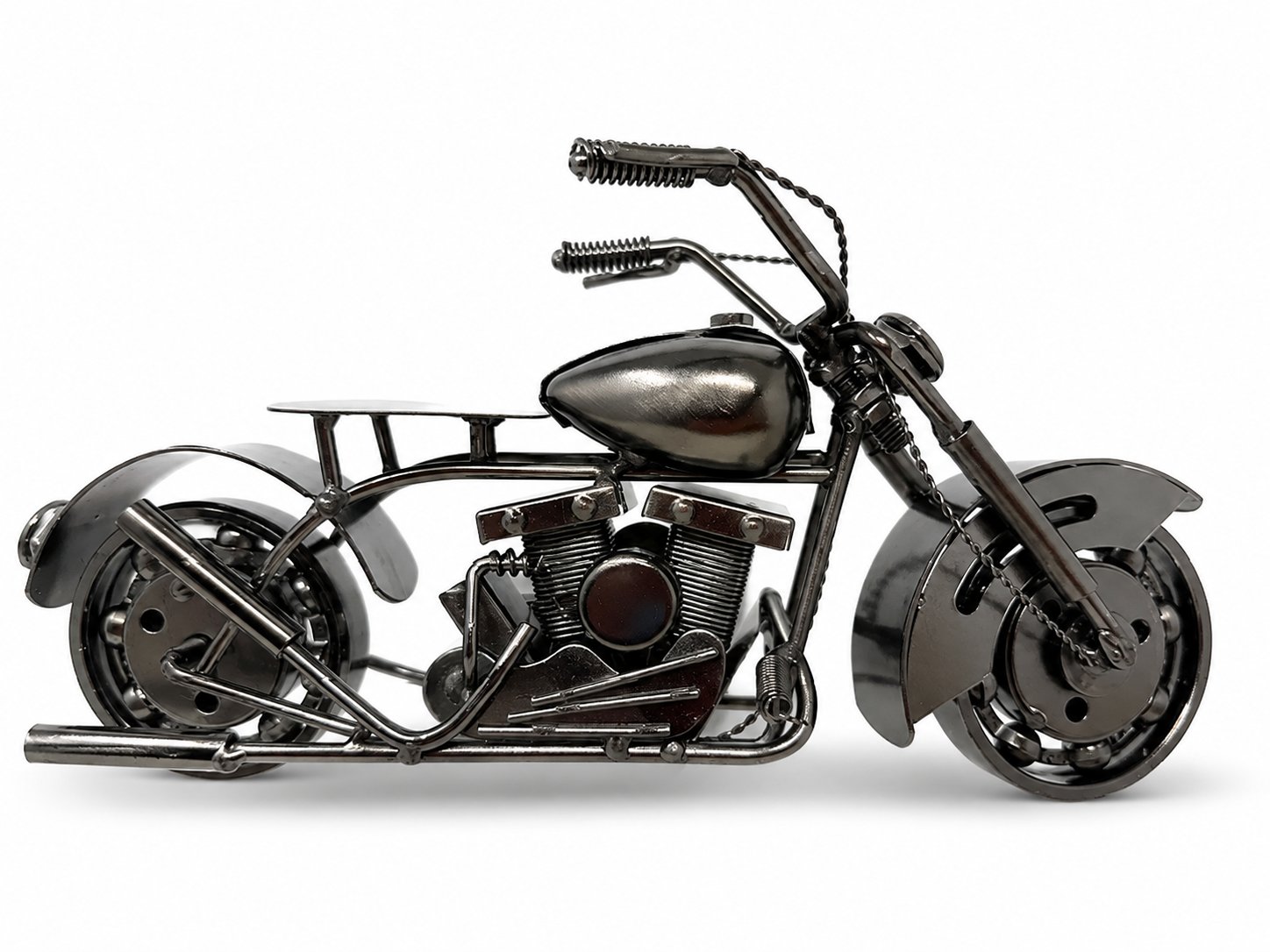
Rust is the enemy of outdoor metal art: iron and steel react with oxygen and moisture, faster in humid air, salt air, and standing water. At Scrap Cycles, we build our motorcycle sculptures from recycled chains, bolts, pipes, and hardware, so we know the care that goes into keeping scrap metal sharp. The fix is simple: to protect metal art, keep moisture off the metal and put a barrier between the surface and the air.
How to Remove Rust from Metal Sculptures Before You Seal
You cannot seal over rust and expect it to hold. Existing rust has to come off first, or the coating will fail and corrosion will spread underneath.
Set up a drop cloth in a ventilated space, brush off loose rust with a wire brush or fine abrasive pad working into welds and tight spots, wipe clean with a lint-free cloth, then let it dry fully before coating. Moisture trapped under a finish is the fastest way to fail.
How to Seal Metal Art for Outdoors and Pick the Best Clear Coat for Metal Art
Sealing is where most people go wrong: the "best" clear coat depends on where the piece sits and how often you want to redo it.
| Coating | Best For | Reapply |
|---|---|---|
| Clear spray finish | Quick jobs, small pieces | Every season |
| Brush-on clear coat | Heavier coverage, detailed welds | Yearly |
| Protective wax | Indoor and covered pieces | Every few months |
Apply in warm, dry conditions, build thin coats rather than one heavy pass, cover every surface including the underside and welds, and let each coat cure before the next. Outdoors, a clear topcoat over clean, dry metal is the most reliable starting point; indoors, a protective wax is often enough and keeps the raw industrial look intact.
How often should you reseal outdoor metal art?
Reseal outdoor metal art at least once a year and inspect it every few months. Recoat sooner if water beads less, a chalky film appears, or small rust spots return. A piece under a covered porch in dry air holds far longer than one on an open fence near the coast.
A Note on Handcrafted Pieces
Our sculptures, from The Boss to The Renegade, are individually hand-welded from reclaimed metal. Small variations in the finish are part of the character, not a defect. A light coat of wax on a display piece helps protect metal art without hiding the welds. Keep them indoors where you can, dust with a dry cloth, and they will hold up for years.


Frequently Asked Questions
What is the best protection for outdoor metal art?
A clear coat or protective wax works best for most outdoor metal art. Clean the surface first, remove any rust, then apply a thin, even coat of clear finish or wax. Reapply as the finish wears down, usually every few months in humid or coastal areas. For handcrafted pieces like Scrap Cycles sculptures, a clear coat preserves the raw metal look while blocking moisture.
How do you remove rust from metal art before sealing it?
Start with a soft brush or lint-free cloth to remove loose rust and dirt. For tougher spots, use fine steel wool or a wire brush, then wipe the surface clean and let it dry completely. Seal it right away so flash rust does not return. Always work on a drop cloth and follow the product label for safety.
How often should you reseal outdoor metal art?
Most outdoor metal art needs resealing every 6 to 12 months, depending on weather, humidity, and salt air. Check for dull spots, water beading less, or small rust specks. If you see any of those signs, clean the piece and apply a fresh coat of clear finish or wax to keep it protected.
Rust does not have to win. Clean the metal, seal it properly, and check it a couple of times a year. If you are looking for a piece worth protecting, browse the handcrafted motorcycle sculptures at Scrap Cycles and find one built to be noticed.